



When you're dressing your baby in soft, natural layers, it's natural to want to care for them well. Merino wool is one of the most common things parents ask us about, and the good news is that caring for it is simpler than you might expect. Our merino is GOTS certified organic, which means it meets rigorous global standards for both environmental and social responsibility, from the farm all the way to the finished garment. Because it's so pure and soft against delicate skin, it's natural to want to care for it well.
This guide covers washing, drying, stains, pilling, and storage, so your merino pieces stay beautiful for years to come.
Why merino wool works so well for babies
Merino wool is naturally breathable, temperature-regulating, and gentle against sensitive skin, which is why it suits babies so well. To care for it, wash only when needed, use a gentle liquid wool detergent, avoid bleach and fabric softeners, and dry carefully to help each piece keep its soft shape. These simple steps help protect the natural fibres and keep each piece comfortable against baby's delicate skin.
Keeping your little one warm and snug without overheating is always a priority, and pure merino wool is one of the few natural fibres that genuinely helps with this. It helps regulate your baby's temperature, wicks away moisture, and lets their skin breathe, so they stay comfortable whether they're indoors or out. Our GOTS certified organic merino is free from synthetic treatments and harsh chemicals, making it genuinely gentle for sensitive newborn skin.
A quick merino care guide
Merino wool baby clothes are best cared for gently: wash only when needed, air between wears, and use a wool or delicate cycle when machine washing is suitable. Because our organic merino wool is naturally breathable and resists odours, it needs washing much less often than cotton. Woolmark notes that wool is easy to care for and it's often best to wash it sparingly.
Wash only when needed, or air between wears.
Use a gentle liquid wool detergent.
Choose a wool or delicate cycle for merino essentials.
Handwash delicate merino knits.
Dry flat in the shade where possible.
Always check the care label first, as care labelling regulations in both Australia and New Zealand set the official consumer information standard for new textile goods.
Choosing a gentle wool detergent
Because our organic merino is free from synthetic treatments, the detergent you choose really does make a difference to how long each piece lasts. You'll want to use a gentle, plant-based liquid wool detergent for your baby's layers.
For best care, avoid detergents with:
Powder detergents, which can thin the natural fibres over time and lead to holes.
Bleach, which can fade or whiten colours.
Enzymes or fabric softeners, which can damage delicate wool.
How often to wash merino
Wash merino only when it is soiled, and air it between wears whenever you can. Wool simply doesn't need frequent washing, and it stays in its best condition when laundered as little as possible. With little ones, spills and nappy leaks happen, so wash when needed and let fresh air do the rest.
Merino piece |
Best way to wash |
Best way to dry |
|---|---|---|
Merino essentials, such as bodysuits, tops and pants |
Machine wash on a wool or delicate cycle with liquid wool detergent |
Line dry where possible, or tumble dry on low if the care label allows |
Merino handknits, such as cardigans, beanies, socks and blankets |
Handwash gently in lukewarm water with liquid wool detergent |
Roll in a towel to remove water, then dry flat in the shade |
How to wash merino baby clothes
Merino essentials
Our pure merino wool essentials are the everyday basics you dress your little one in, including bodysuits, tops, pants, and accessories. They are beautifully soft and gentle, making them a lovely first layer against baby's skin.
These essentials can be washed in the washing machine with a gentle liquid wool detergent. We recommend Earthwise, or Ecostore.
Use a wool cycle if your machine has one.
If not, choose a delicate or gentle cycle.
Avoid powder detergents, as they may thin the fabric over time and lead to holes.
Wash family wool pieces together with liquid wool detergent when it suits your home routine.
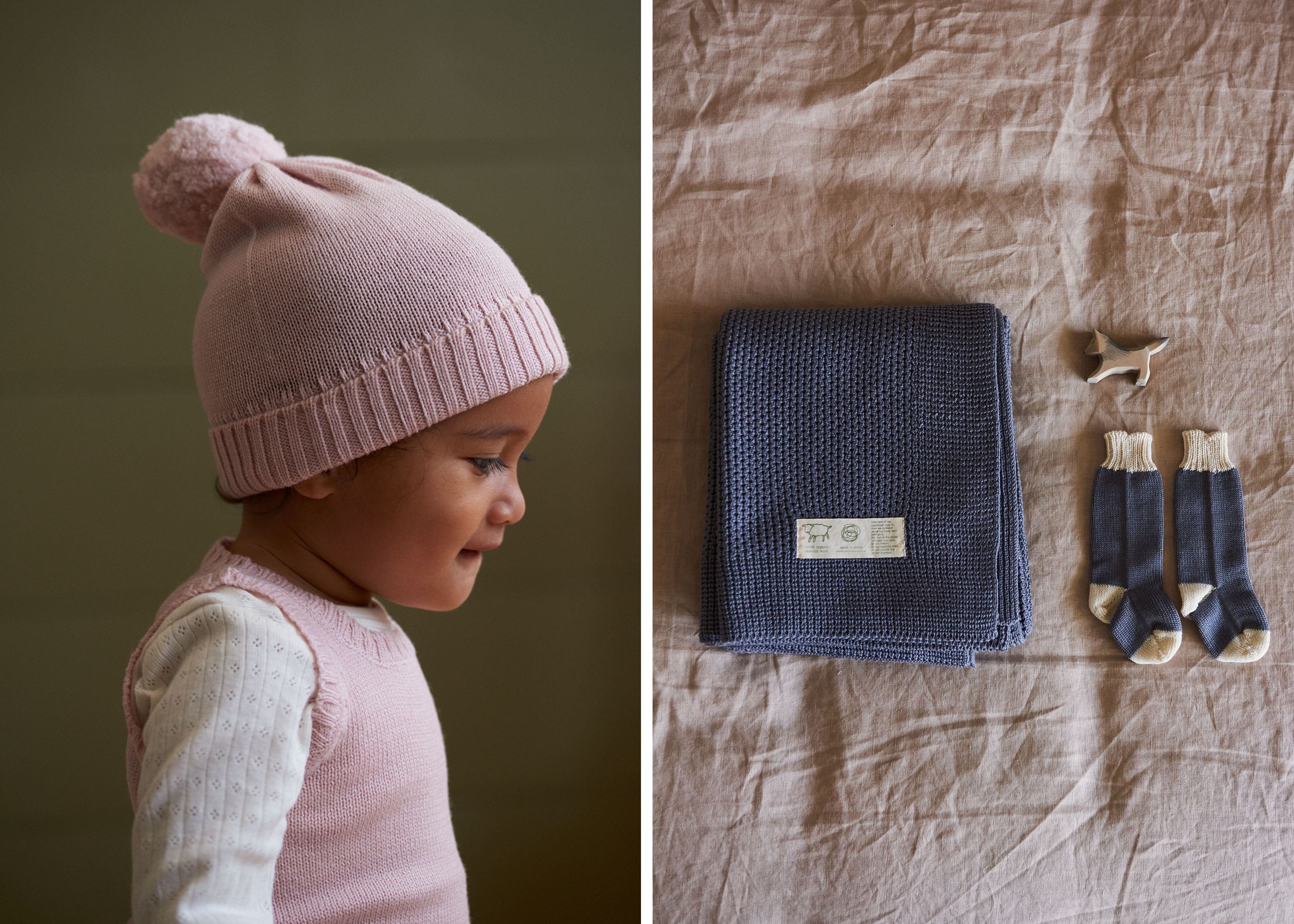
Merino knits
Our organic merino handknits include cardigans, kimono jackets, beanies, socks, and blankets. To keep them in their best shape, we recommend minimal washing, airing between wears, and spot treating little marks where you can. If a full wash is needed, handwash gently.
Because these are knitted from pure organic merino wool without synthetic blends or chemical anti-shrink treatments, they're more delicate than our essentials range and need to be handwashed. Think of them the way you'd care for a treasured hand-knitted piece.
Gently massage your garment in lukewarm water with a liquid wool detergent.
Remove excess water by rolling the garment in a towel and gently squeezing.
Lay flat in the shade to dry.
Don't wring or tumble dry, as this can make it difficult for the garment to keep its shape.
For everyday merino essentials, line dry where you can. If needed, they can be tumble dried on low, but only if the care label allows.
How to dry merino baby clothes
The safest way to dry merino baby clothes is flat in the shade, especially for delicate handknits. Gently roll the garment in a clean towel to press out excess water, then reshape it before drying.
For everyday merino essentials, line drying in fresh air is best. If you need to use a dryer, tumble dry on low only if the care label allows. Never wring out merino wool, as this can stretch the natural fibres.
What to avoid when caring for merino
Merino is naturally resilient. Woolmark explains that each fibre works like a tiny coiled spring that returns to its natural shape after wear. That said, there are a few simple things to avoid to keep your baby's clothing snug and soft.
Avoid hot water, which can shock the natural fibres and cause shrinking.
Avoid wringing or twisting the garments, as this stretches them out of shape.
Avoid soaking merino for long periods.
Avoid any harsh chemicals, bleach, or synthetic fabric softeners.
How to care for stains and pilling
Removing little stains from merino wool
For little spills, dribbles, or food marks, spot clean with a natural stain remover before washing. Merino wool fibres have a protective outer layer that naturally helps prevent stains from soaking in. Because our garments aren't treated with synthetic fixing agents, they're more sensitive to harsh products. Avoid bleach and fabric softeners, as they can cause colours to fade or change. After washing, hang the garment in sunlight where suitable to dry.
Removing pilling gently
Pilling is normal with soft, untreated merino wool. Because our wool has not been treated with a synthetic coating, friction can cause short fibres to move to the surface. Once gently removed, these pills will disappear.
Remove pilling gently by hand.
Use a lint comb if needed.
Use an electric lint shaver with care, as it can catch the knit and cause holes.
Hand removing isn't as quick, but it's the gentlest option for your garment.
How to mend small holes in merino
Because our pieces are made to be worn, loved, and passed on, finding a small hole doesn't mean the end of a garment's life. Mending is a beautiful way to extend the journey of your baby's clothing.
If you notice a small snag or hole, you can gently stitch it closed using a matching wool or cotton thread. Catching a hole early stops it from growing, ensuring the piece stays warm and ready for the next little one to wear.
How to store merino between wears and seasons
When storing your baby's merino for the next season or for a younger sibling, ensure every piece is completely clean and dry. Even invisible spills can attract moths over time. Fold your garments rather than hanging them, as hanging can stretch the soft wool out of shape.
Store them in a cool, dry place, ideally in a breathable cotton bag or storage box, ready to be loved again.
Made to be worn, loved and passed on
Merino wool is a little more delicate than cotton, but it's surprisingly easy to care for. It just needs a little attention to keep it soft and beautiful for as long as possible. All our garments come with washing instructions for easy care, so please check the tag.
We hope this guide helps you look after your lovely snug layers so your little one can wear them again and again. If you have any questions, we'd love to help. You can reach us at hello@naturebaby.com.
Nature Baby has been making GOTS certified organic essentials for babies since 1998, with a focus on pure natural fibres, trusted care, and pieces made to be worn, loved, and passed on. If you're looking for soft new layers for your little one, you're welcome to explore our latest organic baby essentials: see what's new.
Frequently asked questions about merino wool care
Is 100% merino wool washable?
Yes, 100% merino wool is washable. Our everyday merino essentials can be machine washed on a gentle wool cycle, while delicate handknits should be handwashed in lukewarm water.
Will 100% merino wool shrink?
Merino wool can shrink if exposed to sudden temperature changes or heavy agitation. To prevent shrinkage, always wash in cool or lukewarm water, avoid twists, and dry flat in the shade.
Are you not supposed to wash merino wool?
You can absolutely wash merino wool, but it doesn't need to be washed as often as cotton. Simply airing it out is often enough to freshen it up between wears.
What detergent should I use for baby merino?
Always use a gentle, plant-based liquid wool detergent. Avoid powder detergents, bleach, enzymes, or fabric softeners, as these can damage the wool and irritate your baby's skin.
Can I tumble dry merino baby clothes?
Our everyday merino essentials can be tumble dried on low if necessary, though a line dry is always gentlest. Delicate pieces should never be tumble dried, so when in doubt, dry flat in the shade.